
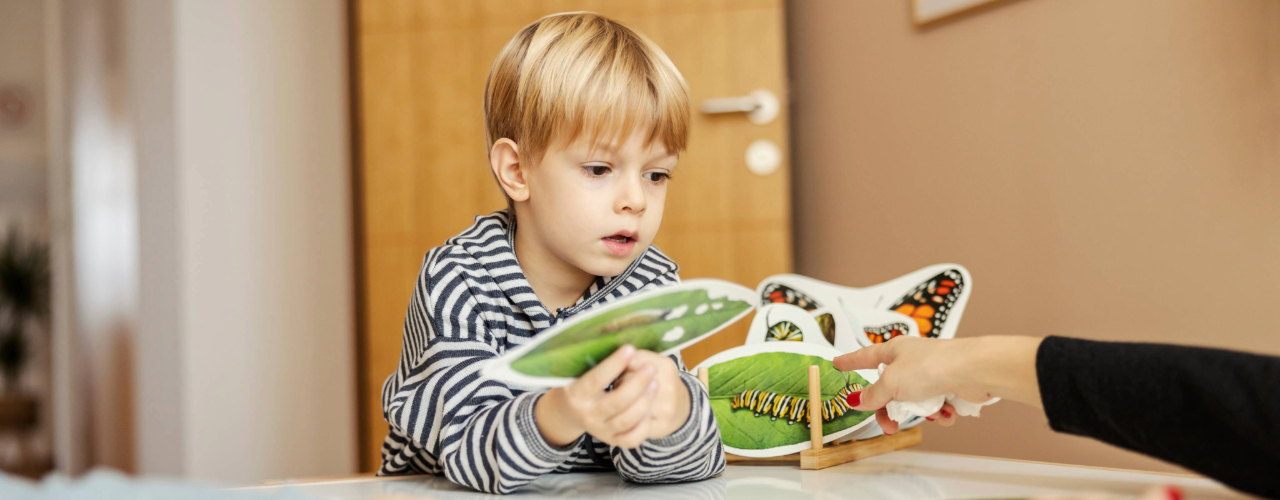
Supporting your child’s communication skills doesn’t have to stop at the clinic door. Many families are surprised to learn how important at-home speech therapy techniques are for helping children improve speech and language skills. Whether your child is just starting speech therapy or continuing progress between visits, practicing at home makes a big difference.
At Endeavors Pediatric Therapy Services, we pride ourselves on working closely with kids and their caregivers to ensure high family involvement in kids’ treatment. Part of that process involves sharing fun, simple activities families can do at home to support their kids’ speech therapy program. Here’s why, as well as some of our favorite at-home speech therapy techniques
Why At-Home Practice Helps Reinforce Progress
Children make the most progress when speech therapy is part of their everyday routine. Practicing simple techniques at home helps reinforce what your child is learning during therapy sessions and creates more opportunities for meaningful communication in real-world settings.
Key Benefits of Home Practice
- Encourages consistency between therapy visits
- Helps children build confidence with familiar people
- Gives parents insight into their child’s strengths and areas for growth
- Promotes faster and more lasting improvements
Easy and Effective Speech Therapy Techniques for Home
Speech therapy doesn’t need to feel like homework. The best techniques are playful, simple, and easy to weave into your daily routines. Here are five of our favorites.
Show Your Child How to Say It: Modeling and Repetition
Modeling involves clearly saying a word or sentence you want your child to learn. Then, allow them to try repeating it. For example, if your child points to a cookie and says “More,” you can model: “You want more of the cookie.” Repetition gives your child a chance to hear and practice the correct version.
Tips From Our Team
- Speak slowly and clearly
- Emphasize target words
- Repeat the word several times in different situations
Build Vocabulary and Comprehension: Read Together
Reading aloud is a powerful way to introduce new words, sentence structure, and conversational turn-taking. Use expressive voices, point to pictures, and pause to ask simple questions like “What’s that?” or “What do you think will happen next?”
Tips From Our Team
- Choose books with rhymes, repetition, or simple storylines
- Let your child finish familiar sentences or repeat fun phrases
- Label items in the pictures and describe actions
Pair Words and Movement: Use Visual Cues and Gestures
Combining spoken words with gestures or pictures helps children connect meaning to sounds. For instance, saying “up” while pointing upward helps reinforce both the word and its meaning.
Tips From Our Team
- Use hand signals for “more,” “stop,” or “help”
- Create picture boards or simple flashcards
- Act out words during songs or stories
Word by Word: Expand Your Child’s Speech
This technique involves repeating a child’s phrase but adding one or two words, helping them learn how to grow their sentences. For example, if your child says “dog,” respond, “Yes, the dog is running!”
Tips From Our Team
- Repeating their words back with added detail
- Using descriptive language in your responses
- Asking open-ended questions like “What else did you see?”
Music, Memory, and Rhythm: Sing Songs
Repetitive songs and nursery rhymes are great tools for practicing sounds, syllables, and new words. The repetition and rhythm make it easier for children to remember and repeat phrases.
Tips From Our Team
- Sing favorites like “Old MacDonald” or “Itsy Bitsy Spider”
- Add hand motions or simple instruments
- Pause and let your child fill in the last word
Ready to Support Your Child’s Speech Development?
From mealtime to playtime, every part of the day can be a chance to practice speech therapy techniques, turning small movements into big learning opportunities. The key is consistency, encouragement, and keeping things fun.
At Endeavors Pediatric Therapy Services, our pediatric speech therapists partner with parents to support each child’s progress, both in the clinic and at home. If you’re ready to learn more, contact us today to schedule an initial evaluation. We’re here to help your child thrive in every conversation.
Tags: Child Communication, Language Development, home speech practice, speech therapy techniques